


For those who just want to pack a sketchbook and pen, Steve Strode demonstrates rapid sketching techniques for the artist on the move.
Gesture drawing
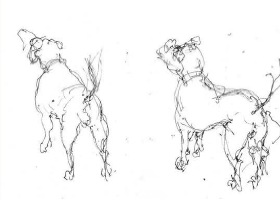
Dog, ink sketch
Drawings that take minutes or even seconds to accomplish can give any artist invaluable practice. Quick execution, or gesture drawing, is a great way of developing our drawing skills. It takes practice, as the temptation to create a finished piece can be hard to resist. Not every drawing needs to be a lengthy piece of work.
Starting is cheap and easy. All you need is a pocket-sized pad and a pencil. Or try different drawing implements like graphite, carbon or ink pen. I can recommend the ink pen, as it removes the ability to erase or modify the image.

Gesture sketching is about catching the essential lines of a subject. Rather than a careful study, it is more concerned with the essence. While you’re drawing so quickly you will spend more time looking at the subject and not at the paper. These sketches are a chance to practice and learn without judgement.
Rapid sketching
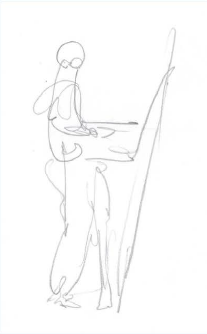
Boy with a Surfboard, 2B graphite sketch
I completed this sketch in five to ten seconds. Remember, these rapid sketches capture the gesture. Sketching is not an attempt at figure studies or portraits. The more you do the more confident your touch will become.
Don't skip these initial studies as they train you to look longer at the subject. Even when you do slightly longer studies that allow you to snatch a look at the paper, don't desert this exercise for good.
Sketching moving subjects
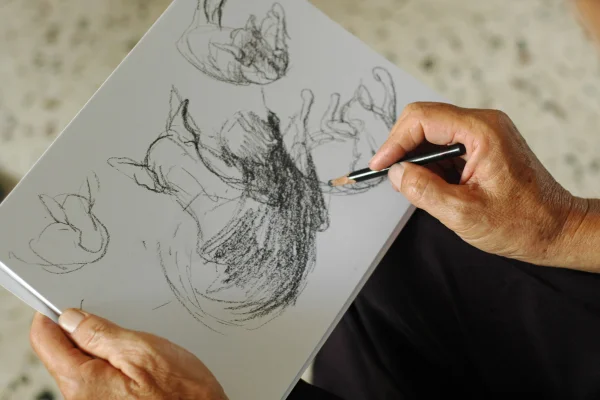
Using gesture drawing to sketch animate subjects is a great way to stretch your skills. People and animals... you never know when they’re going to get up and leave or change position. They make great subjects for quick studies. Try extending your drawings to 20 or 30 seconds and remember to only glance at the paper.
Looking for more advice for drawing and sketching? Check out our collection of handy tips and techniques with guides and articles to help you develop your skills.
Rapid sketching will help you to develop confident lines and expressive touch. In turn this will help you to tackle these more challenging pieces, giving them more life than if you'd struggled with a tentative hand.
Practice sketching
Practice one
- Sit in a coffee shop and draw individuals engaged in conversation or queueing at the counter.
- Place the pad on your knee or the table, look to where you’ll start on the page and place the pen there.
- Now keep looking at the subject and draw quickly without lifting the pencil. You’re drawing the gesture, not the subject. Do this without looking at the paper, and take no more than ten seconds.
- There you’ve done your first gesture drawing. Date it, and do another, then another.
Practice two
- Take a seat by the window and draw the public outside who may be standing at bus stops, chatting or waiting around.
- As time progresses draw them on the move.
- Figures walking towards you are easier than those walking across your path, but try both.
- Draw a pose that someone might not hold long enough for an extended study. Emphasise movement, action and direction. Artists often overlook these in longer drawings.
Slow down

Spend some time doing these rapid drawings before gradually working towards studies that take a little longer. But remember, don't stop the quick studies. The time you invest in the shorter studies will improve these longer drawings, so keep going.
Sometimes your chosen subject might afford you more time to draw. This means you can extend your sketching time. Don't let this be a temptation to take your time. Ask yourself: if they got up and left after ten seconds would I have a basic gesture drawing?
If they stay a little longer then make another pass with the pencil, restating the whole figure. Don’t concentrate on one area alone. Create a decent all-round study, and not just an excellent rendition of someone’s ear.
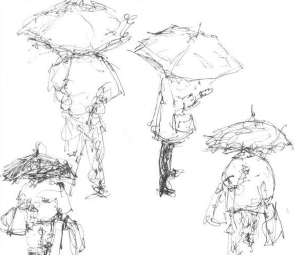
For these slightly longer drawings allow yourself a series of quick glances at the paper to check your progress. Ensure you return your look to the model immediately.
We’re training ourselves to reverse the looking process. We want to look at the model and glance at the drawing, not the other way around. The more we look, the more we’ll draw what we see, rather than the essence.
Sitting in the window on the first floor of a building gave me a different perspective to sketch these figures than from ground level
Set time limits
Spend no more than five minutes or so on any study, anymore and they are heading towards a more finished piece. Don’t view these slightly longer drawings as the peak of your progression because they appear more complete. Keep all the studies flowing thick and fast whether they take seconds or minutes. Master this and your work is sure to improve because you’re spending more time looking.
Good practice
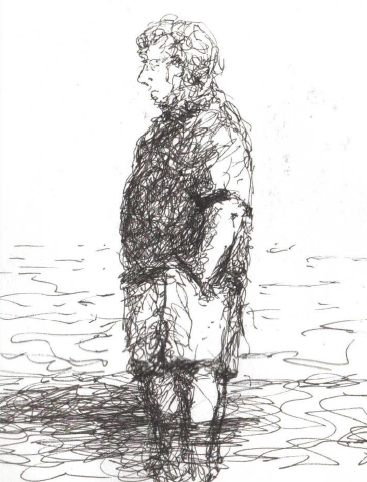
We can learn more from a thousand good starts than a couple of finished pieces. Look at the sketches and colour studies of Constable and Turner; they’re fantastic works in themselves.
Like drawing, imagine how this looser way of working could build up your confidence and filter into your longer studies. Constant practice will eventually see you working quickly and instinctively.
The fast pace of gesture sketching will help you ‘loosen up’ and avoid a stiff drawing style. Focus on the important elements rather than the minor details. You’ll also become more observant because you’re taking longer looking at the subject as you draw. Don't forget to date all your work and plot your progress.
Always carry a small sketchbook with you. Draw and sketch in coffee shops and pubs. Or maybe in the car... although the car works best when parked, not driving!
When you develop an artistic skill, you never waste the time and effort. Kimon Nicolaides, the American artist said that "the only way to learn how to draw is by drawing"... and it truly is that simple.

To find out more about Steve Strode, visit his website.
Comments
Login or register to add a comment
No comments