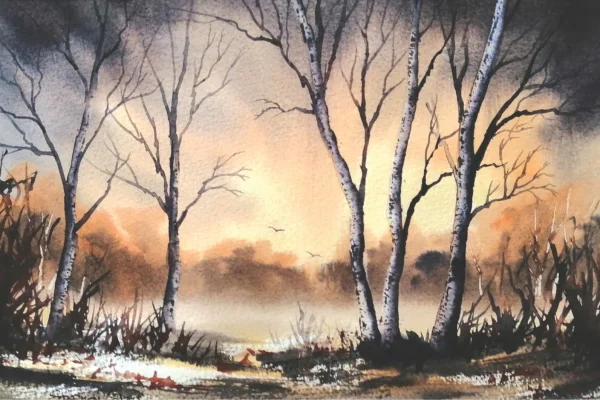
There are so many brushes on the market and so much conflicting advice that it is quite a challenge to make a selection. A lot will depend on your style and what subject you choose to paint. Of course, it is possible that the brushes you choose may also influence your style. There are brushes that cover a multitude of brushstrokes and there are those that have been designed for a more specific purpose and are best suited for limited techniques.
My ethos is that a watercolour brush should be capable of delivering as much paint as possible in the shortest time. This is based on the principle that watercolour paint dries quickly so the less paint you use, the sooner it loses its fluidity and becomes streaky. All the brushes I use help me in combatting that loss of fluidity and I always advise that you use the largest brush you can for the task in hand.
Since becoming a professional tutor, I have been lucky enough to forge a working relationship with the brush manufacturer, Pro Arte. I have been able to specify certain design features for some of my brushes and they are now available for you to buy from Art Supplies at Painters Online. I still use a selection of off-the-shelf brushes, such as the Pro Arte Series 103 Riggers and Prolene Series 106 flat brushes, however, there are plenty of significant advantages with some of the brushes I have developed and I’d like to give you a little information about my own Signature range.
Explore Stephen Coates' Brushes
The Stephen Coates' Brush Range
Traditional Hake
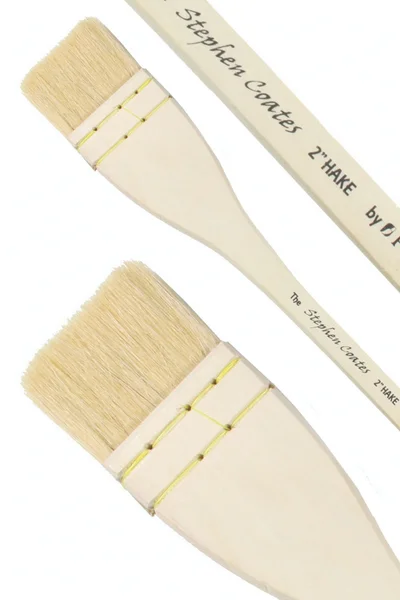
Hake is a Japanese word and should in all probability be pronounced har-kay. I tend to pronounce it in a more anglicised way, as in the fish! I fell in love with the traditional hake when I first took up watercolour. In fact, the first person I saw using anything like it was Frank Clarke on a television series many years ago. The hake is made with goat hair, which is incredibly fine and soft. This allows the artist to deliver copious amounts of water really quickly to cover expansive areas of a painting such as a sky.
The broad and flat Japanese-style hake was first popularised by the great Ron Ranson. The chisel-shaped brush head is bound then stitched into a wooden slit. The particular version imported by Pro Arte and labelled as the Ron Ranson is undoubtedly the best one. The brushhead is a perfect length and contains just the right amount of hair. The Stephen Coates Signature version is identical to the Ron Ranson and is available as a medium with a width of 1.18in. (3cm), and a large with a width of 1.77in. (4.5cm).
Method
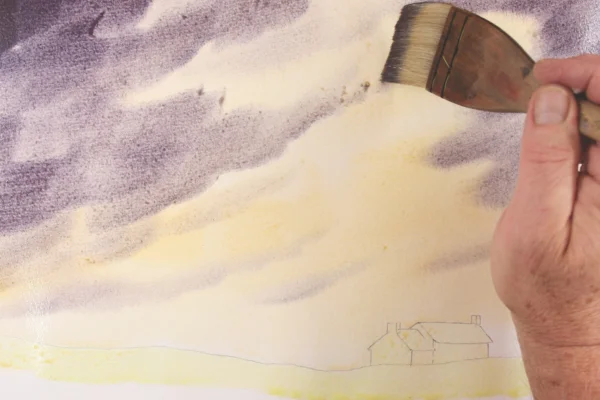
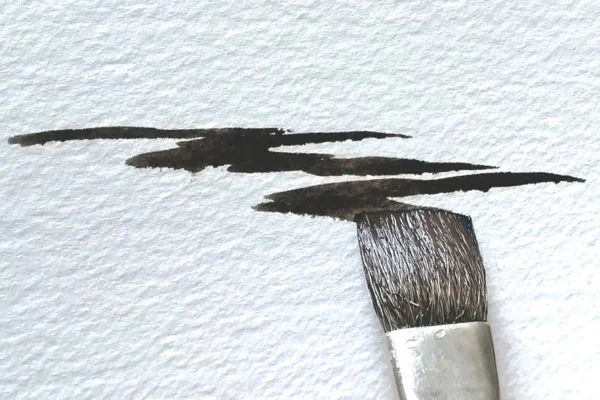
Use the hake really wet and cover the surface of the paper with water very quickly. Some artists fill the brush with diluted paint and apply it to dry paper. My preferred method is to wet the paper f irst then apply much thicker paint across the film of water, diluting the paint as it is brushed in. The chisel-shaped brushhead allows the artist to rotate the brush so that a variety of brushstrokes can be made. It can be swept across using the full width or gently flicked using just the corner to create smaller and narrower marks.
Shop the Traditional Hake brush
Mini-hake
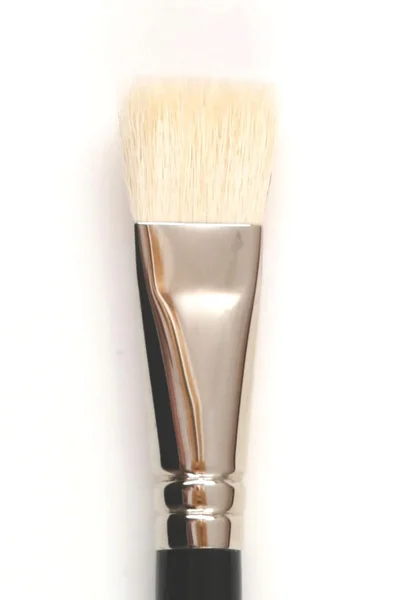
As a long-time lover of goat hair and the chisel-shaped brush head of the hake, I was looking for a smaller version made with a metal ferrule and a traditional round handle. This in itself prolongs the life of the brush, because the clamped hair in the metal ferrule is more reliable than the stitched wooden version, which can start losing hair after a while. Furthermore, the hair tends to splay out a little making the tip more sensitive.
Pro Arte kindly made several versions, experimenting with different hair length and volume. Eventually we got it just right, and settled on a width of ¾in. (1.9cm) and decided to call it the Mini-hake. I use this brush regularly for painting smaller skies and other expansive areas of my paintings. It is incredibly versatile as well. The chisel-shaped brush head allows the artist to turn the brush and create a huge variety of brushstrokes.
Method
The Mini-hake performs in a similar way to the larger traditional version, but on a smaller scale. It is perfect for skies, and other broad soft washes in a painting. It is also versatile, enabling narrow zigzag lines and delicate flicking to create reeds.
Spearhead
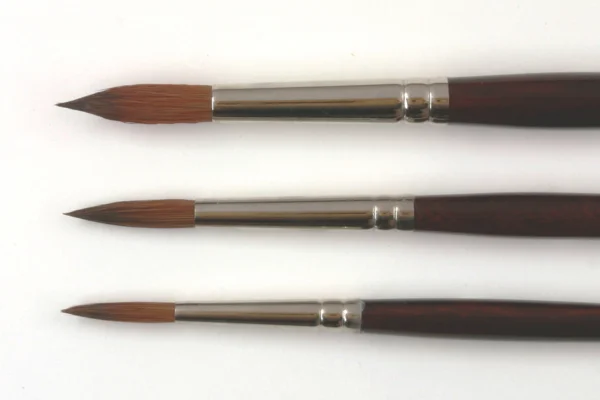
Having used Pro Arte Prolene synthetic Round brushes for many years, I accidentally acquired a random No. 8 Round brush from somewhere that was of a completely unknown origin. The markings on the handle had worn off so it couldn’t be identified but the brushhead was longer and sharper than the Prolene series. Pro Arte agreed to replicate the profile of the brush but also suggested changing the hair to something that had become recently available. All we needed was a name so I came up with Spearhead, because the tip resembled that of a javelin or spear.
Spearhead is made with a new-wave synthetic nylon and the brushhead mimics the performance of sable at a fraction of the price. The hairs are much finer than those in the Prolene range and are also slightly wavy. This produces a much softer brush head, which is able to swell and allow in much more water. Furthermore, the paint f lows through the tip onto the paper with ease, enhancing the ability of the artist to cover areas more fluidly. They are also made with a beautiful long rosewood handle and are available as Nos. 6, 8 and 10.
Method
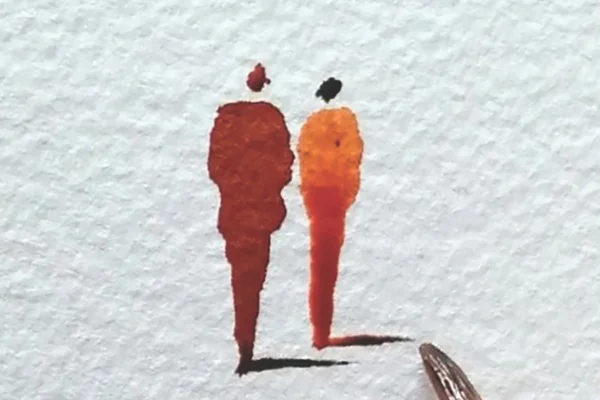
The wonderful water-holding capacity of the three Spearhead brushes allows the artist to use a delicate touch whilst delivering an abundant flow of paint. The No. 6 in particular has a really fine point and you can paint tiny human figures, narrow shadow lines and birds.
The Scimitar
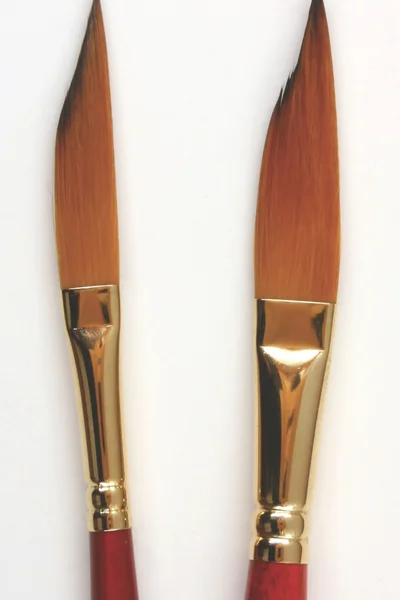
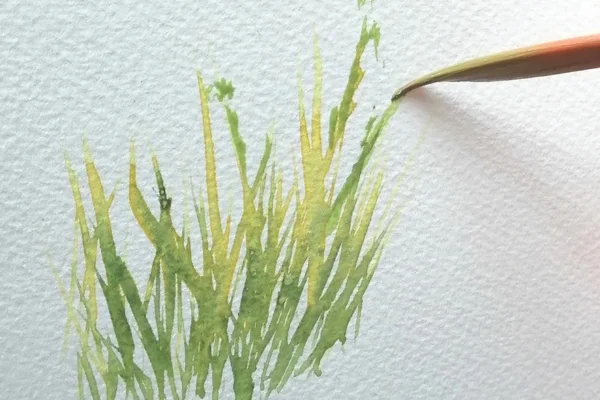
The shape of this unique flattened brushhead mimics a scimitar blade. It features a long sweeping curved chamfer that terminates at the tip with a micro-point. This incredibly fine tip delivers super-fi ne lines that are perfect for long flower stems, grass and reeds. The brush holds huge amounts of paint, allowing continuous delivery without constantly returning to the palette for a refill. A twist and a turn of the brush creates beautiful fluid, organic results. This brush is a little unstable when it is full of paint; in fact, it is decidedly wobbly so not easy to control in the traditional sense. It is best held towards the end of the handle and stroked gently to produce unique natural shapes.
The brushhead was already available as a sword liner, but I asked Pro Arte for a much longer handle to allow a more fl amboyant and expressive brushstroke. It looks really classy too, with a light-wood handle and a faux gold ferrule. The brush is available in medium and large.
Method
With the brushhead full of paint, the long handle allows you to sweep, twist and turn dozens of natural shapes without having to return to the palette for paint.
Foliater
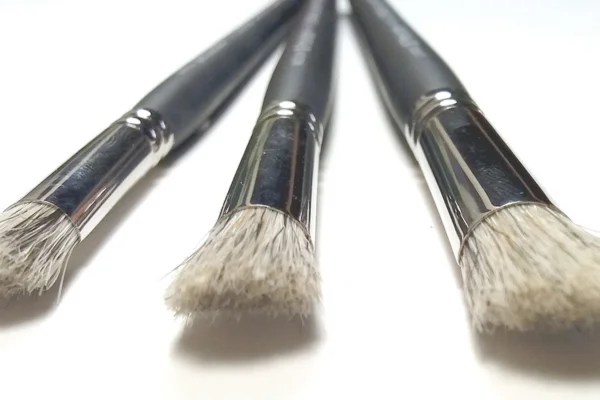
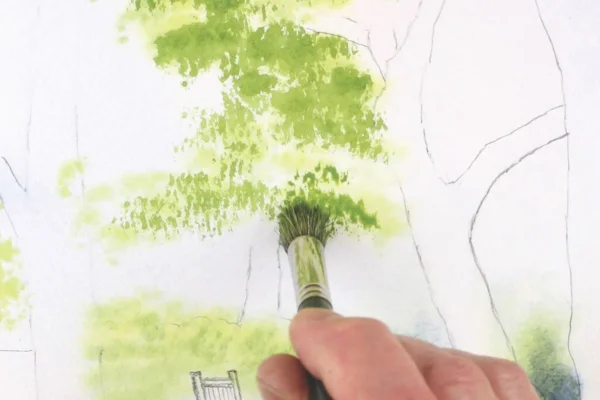
You may already be familiar with the Foliater, as it has been around for a few years. Achieving a natural foliage effect has long been a challenge for the watercolour artist. A firm bristle, such as hog hair, which is used mainly for oil-painting brushes, is ideal to produce a textured stippling effect, however, hog hair on its own does not hold water very well so it’s all or nothing. If you punch down a little too hard, all the water shoots out and you end up with a bit of a mess.
The Foliater is designed with a unique semi-circular ferrule; this creates a mushroom-shaped profile that is ideal for most types of foliage. The hog hair is mixed with something much finer, which helps store the water in the brush head and provides much better stippling control. You can deliver as much or little paint as you need. The bristles are also cut back at 45-degrees, which allows the artist to hold the brush at a perfectly natural angle. They are available as a small, medium and large, or as a set of all three.
Method
I always recommend having at least two mixes prepared when using the Foliater: one that is plentiful and quite loose to create the shape of the foliage; and others that are much darker and thicker to blend in. The brush is filled with paint and gently stippled.