


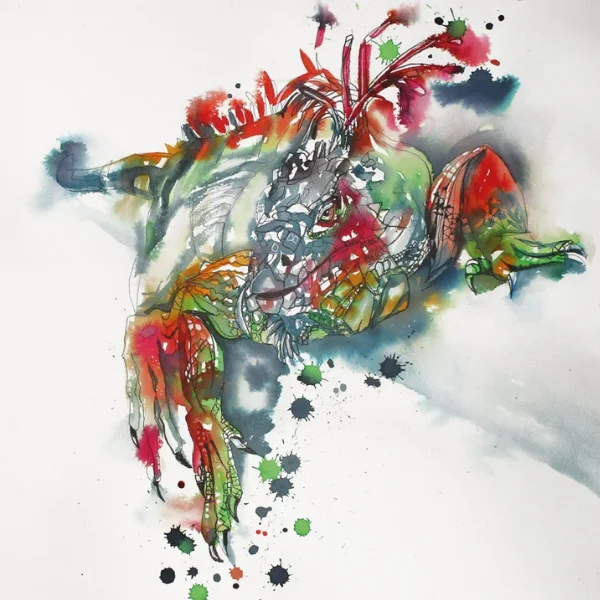
Green Iguana, pen and wash on Seawhite’s NOT watercolour paper, (42x42cm)
Discover top tips for painting with pen and wash as you create a colourful green iguana with advice from Liz Chaderton and Paul Riley.
How to paint with pen and wash
The challenge with pen and wash is how to make each element play a significant role.
You're not trying to create a lovely pen drawing then colour it in, nor do you want a watercolour painting that you simply outline. The aim is for pen and colour to add to more than the sum of the parts.
Top tips for successful pen and wash paintings
- Keep your pen clean, be it fountain or dip
- When inking in, work from top to bottom
- If necessary use blotting paper to keep work dry
- When working monochromatic use dilute ink of the variety used for the pen work
- Keep your watercolours paler than the pen work
- Keep your watercolours clean
- Make sure washes are bone dry before adding pen work and visa versa
- Wash out fountain pens with detergent regularly
- Don’t try to draw with dip pens that don’t work. Change them for fresh ones
- Lastly, enjoy yourself!
Paul Riley's top tips originally featured in the May 2018 issue of The Artist. Read every issue since 2015 (and every new issue) with a Studio Membership.
Painting with pen and wash
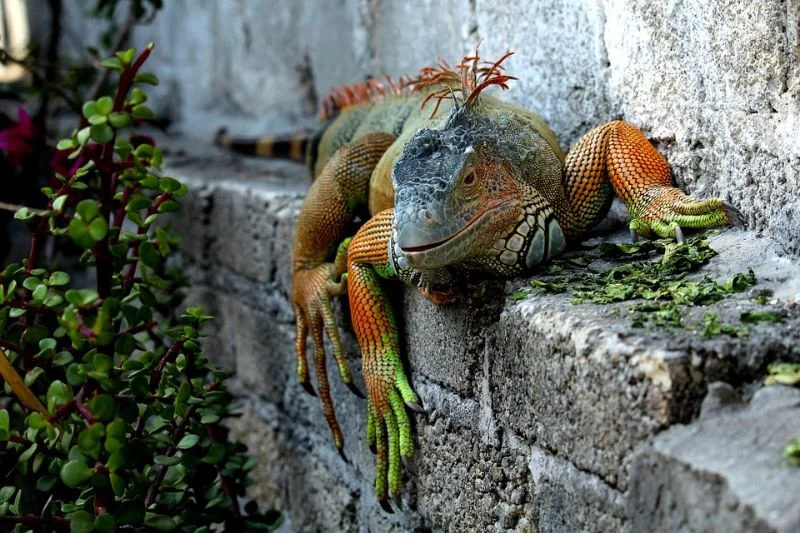
Reference photo (available from Pixabay)
Preparing your pen and wash painting
- Make sure your fine liner pens contain waterproof ink. Liz used Unipin in black.
- Use transparent colours so the line work remains visible. Liz used Talens Ecoline liquid watercolour. You could also use lightfast inks or Brusho.
- With the tail receding into the background, you need to make sure there is variation in the line strength. Add weight to the closer and more important areas.
- Don't let your line work could become too rigid. Remember that you want to try retain the expression and looseness of a sketch.
- Spend a couple of minutes spent on a thumbnail to help plan your painting.
- Ponder your lights and darks along with the overall composition.
- As you produce your thumbnail, think about what you want to say in your painting. If you do not know what you are trying to communicate, it makes it hard to know when to stop.

Thumbnail sketch
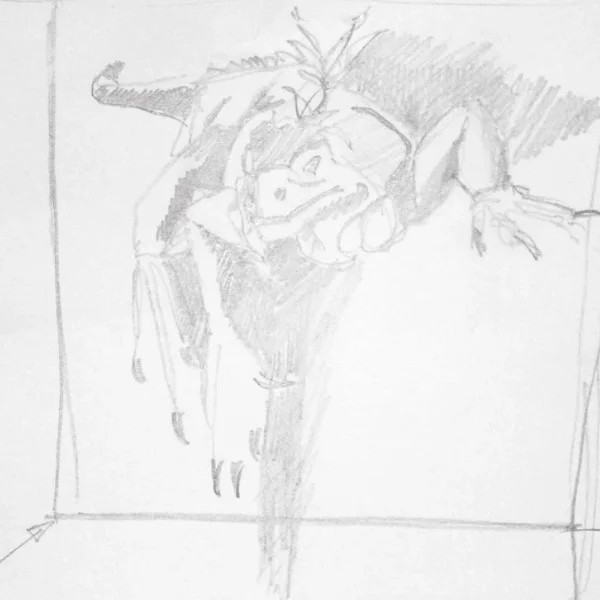
Having completed my thumbnail, I decided to crop in closer to the iguana. As you can see, my sketch is not a thing of beauty; it is a working doodle.
Step One

Begin with a light pencil guideline before reaching for the pen. Then, using the finest pen (0.1mm), begin at the centre of interest and work outwards. Use a continuous-line technique in places to retain a fresh feel to the lines.
Top Tip! You don’t need to draw every scale but rather to capture the feel of the skin.
Step Two
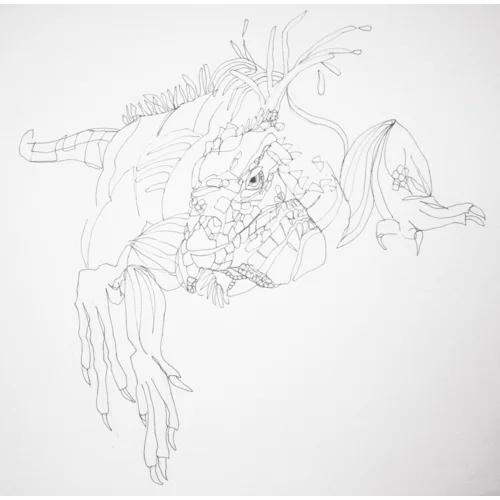
Continue in the same way with the rest of the body. Try to leave out anything too specific on the furthest parts of the lizard. Fight the temptation to include too much close-up detail.
When you are sure the pen is dry, rub out the guidelines.
Top Tip! Even pens that promise to dry instantly can smudge, so be careful!
Step Three
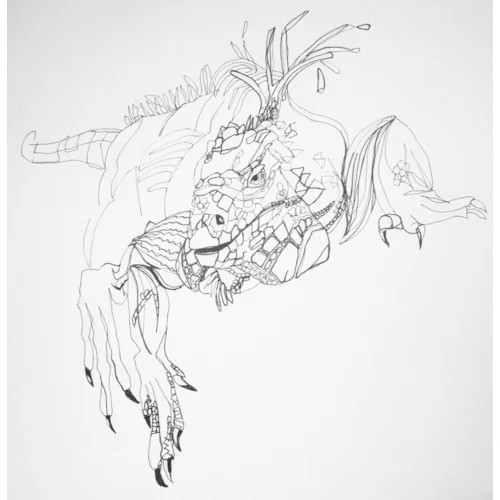
Take a thicker pen (0.8mm) and begin to add more detail, strengthening lines on the head and front legs to bring them forward.
Top Tip! Be sure to stop too soon rather than too late. You can always add more ink after adding the colour.
Step Four
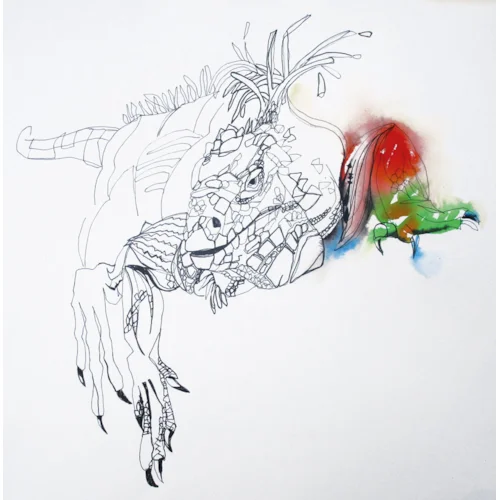
Now comes the fun part of adding the colour. Begin working wet-up-to-wet without paying too much attention to the lines. Be careful to leave flashes of the white paper.
Use a small spray bottle to soften edges in places.
Discover a host of guides and step-by-steps covering all media in our 'How To' area. Why not try something new?
Step Five
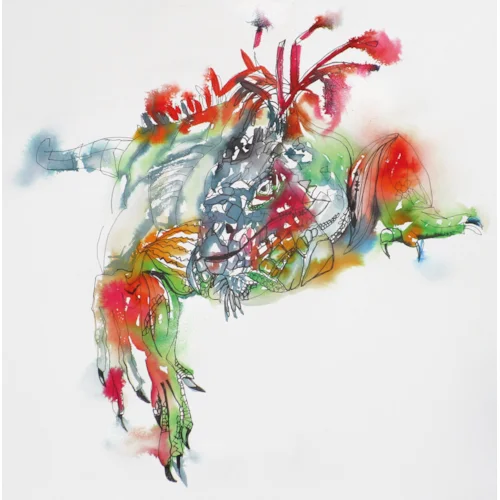
Continue painting the lizard. Try to keep the strongest colours around the front legs and head, and dulling down the colours towards the back by adding more blue.
Step Six
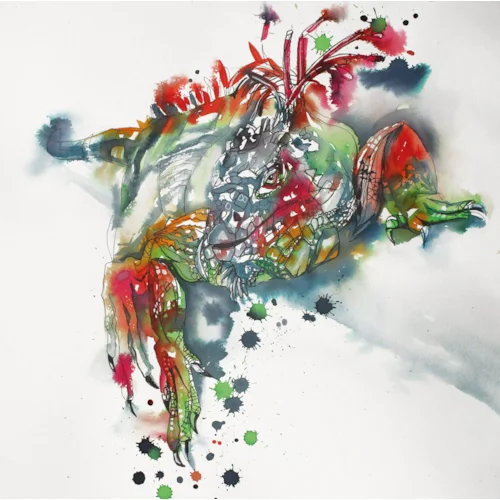
Use a blue wash to indicate the ledge and darken some areas to help the animal stand out. Carry the shadow tone up into the animal to add layers of interest. Add drops of paint to emphasise the draped legs.
To finish, strengthen the ink around the eye and add a few tiny spots and lines of white where highlights may have been lost.
Top Tip! You can use an opaque white pen or gouache to add the final touches.

Liz Chaderton is a regular contributor for Painters Online. She also runs regular workshops near her home in Berkshire. See more from Liz on her website.
Sometimes we may include links to online retailers, from which we might receive a commission if you make a purchase. Affiliate links do not influence editorial coverage and will only be used when covering relevant products.
Comments
Login or register to add a comment
No comments