


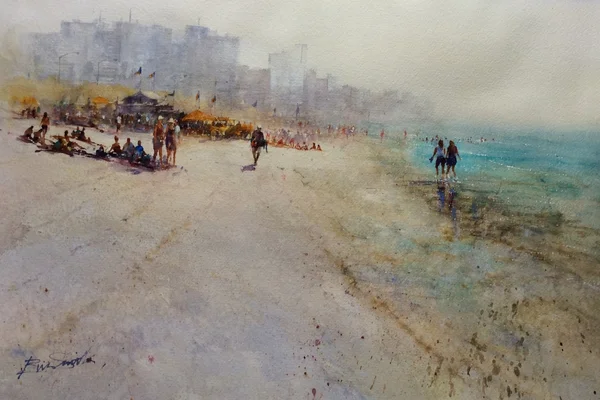
Brian Smith uses a watercolour sketchbook study to work up a painting of a hot day on the beach in this demonstration.
How to develop your painting idea
Remember, the viewer doesn't normally see your starting point, they only see the finished image. So you can develop your original idea in whichever way you feel will benefit your work. The sketchbook study is the skeleton on which you have to build.
I prepared a small travelling palette with watercolour before I got to the beach. I worked with cobalt blue, alizarin crimson, turquoise, cerulean blue and burnt sienna.
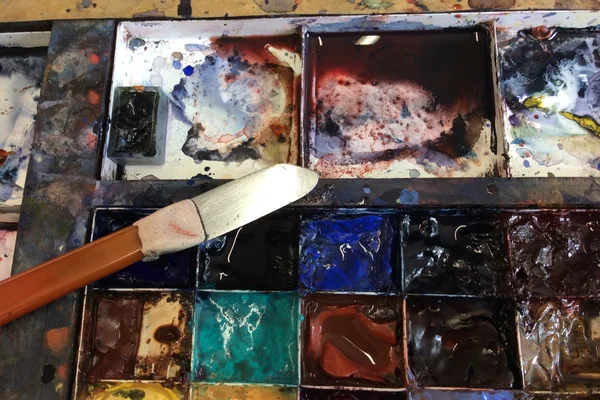
Know what you want to achieve with the bigger picture, but allow yourself to make small adjustments along the way. I wanted to imply heat, atmosphere and beach life. My first marks and decisions set the scene. I picked a high eye-line to draw the viewer into the painting with implied marks to suggest sand.
The day was sweltering when I made the initial study, so I had to work quickly! The distant buildings were a tone of wash and I used the figures to suggest movement. The heat meant that I couldn't linger when applying washes and a flick of a loaded brush implied the foreground texture.
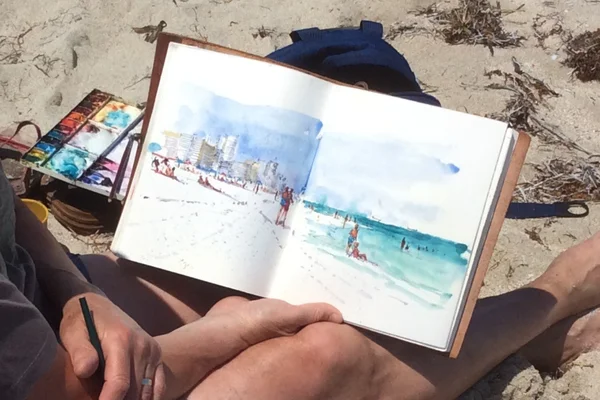
I didn't want to represent a blue sky. The heat of the day was building and the heavy atmosphere set the scene with the distant city a collective general shape. I used my old butter knife to imply structure and lift out pigment for variation and tried to avoid hard edges.
My main problem was how to link the larger shapes. Because I didn’t have any foreground buildings and cast shadows I was finding it difficult to link areas. I set the light high and slightly to the right to create short shadows and make the tones dark. The light would hit top edges in places and flat surfaces that face upwards.
Painting a beach scene in watercolour step-by-step
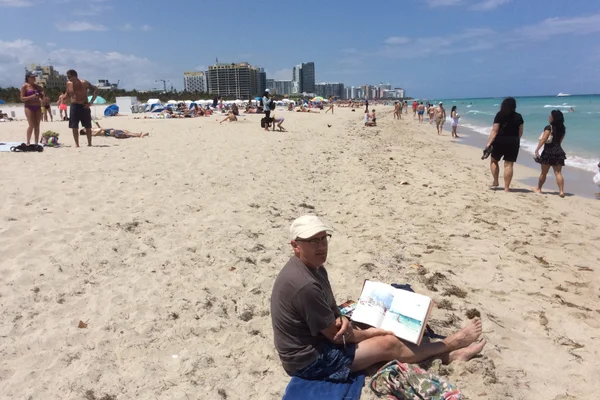
Reference photograph
Stage 1
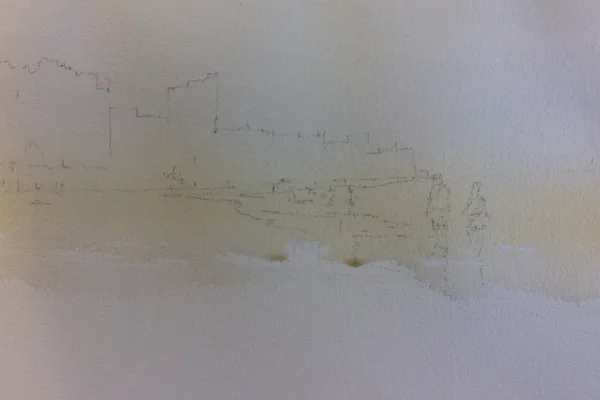
I used a 4B pencil to suggest the basic elements – the distant city, the water’s edge – and not much more. Whilst the paper was still damp I applied a yellow/brown diluted mix to indicate foliage.
Stage 2
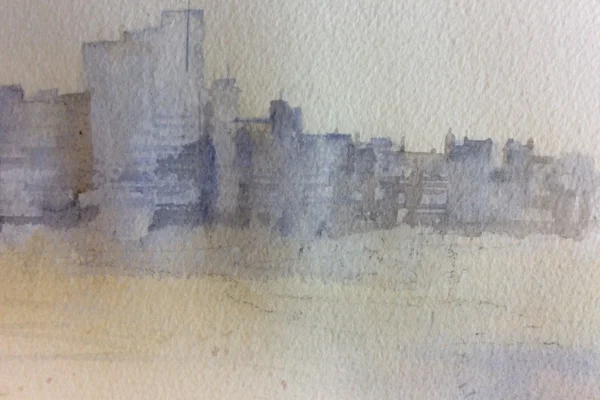
At this point I was not sure how the middle ground was going to evolve. I wanted to create interest and form using a beach structure, possibly a vehicle and people. Maybe even a canopy would help and be in keeping with the setting.
A viewing platform for lifeguards would also help as I was moving through from background to foreground. A touch of colour into the foreground gave perspective, taking the viewer into the central area.
Stage 3
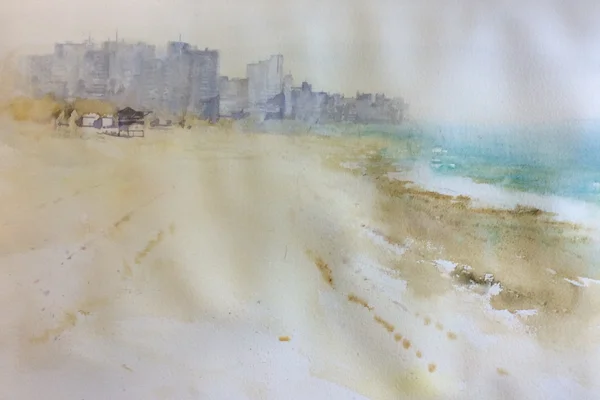
The sand is yellow ochre and the water cerulean blue with a touch of turquoise. I darkened the water’s edge as I wanted this to be wet sand with reflections established later on. I left the white paper as I hadn’t decided whether to have waves breaking. You are always making small decisions that will ultimately affect the overall look.

Stage 4

I needed the buildings to link the other shapes, so I used a truck and workmen in conjunction with sunbathers on the beach. I used burnt sienna with touches of pure pigment to represent clothing to capture proportion and gesture. Angles of the body and head and collective shape helped to give the group movement.
I based my figures on a scale of 7-1/2 to 8 heads high for a man, half a head less for a woman. A male figure is up to 3 heads wide, a female 2 to 2-1/2 heads high. A small gap between the legs helps definition and gives movement.
Stage 5
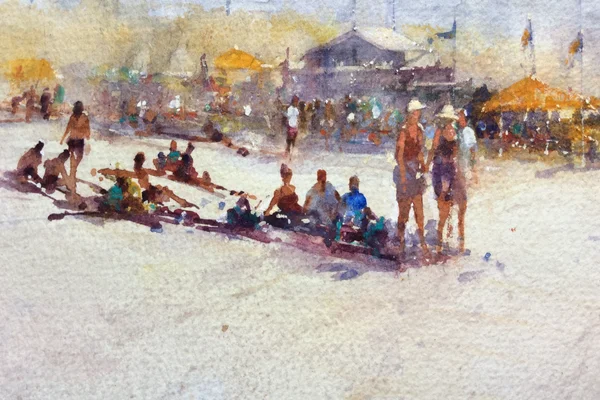
The left-hand side draws the attention – this area had to create mystery. I used the same colour for the canopy as I did for the truck and workmen. I wanted to suggest movement and did so with figures – standing, laying, sitting, light against dark and dark against light. I used French ultramarine and alizarin crimson, with touches of pure pigment to hint at detail.
The foreground group had to work collectively. The three standing women link with the middle ground and help the narrative, holding the work together. You need areas of focus and others of suggestion. This allows the viewer’s eye to drift, linger, and become absorbed in the narrative.
Stage 6
Work and Play, watercolour, 35x55cm
I began to work on small, collective areas. The beach vendor working his patch gestures to the two women walking in the surf. I adjusted the shadow, which was too long. I also gave him a white hat to accentuate his glance to the right.
The middle-ground figures to the right of the vendor lead the eye across to the two foreground figures in the surf. Splashes and reflections in the damp sand ground the figures. I scratched back with my scalpel to create sparkle on the water.
The flagpoles and lampposts create a vertical link. The open foreground with splashes of texture invite the viewer in. I tried to ensure that I did not overwork the painting and felt that now was the time to put my brush down.

Brian Smith runs classes for watercolour painters and demonstrates to art societies. Brian also tutors workshops at West Dean College and Higham Hall. For more information visit his website.
Comments
Login or register to add a comment
No comments